
Your cart is empty.
Enskede Flea Market Finds
It was Saturday, June 6th, National Day. The sun was a glowing dot in the middle of the sky, the clock had just passed 13:00, and the asphalt in Enskede exhaled pure midsummer heat. Most flea market visitors had already retreated to the shade with their coffee cups, and the tables along the villa gardens slowly began to pack up. This was the exact moment when the usual crowd had given up – but for us, that’s when the real hunt begins. This is when you find what’s hidden at the bottom of the boxes.
We had barely walked a hundred meters along the lush, sun-baked sidewalks before it appeared. On a worn garden table, half-hidden in the shade of an old parasol, lay a jumble of faded books and tools.
It was there, under a stack of old comic books, that it lay. A sturdy clothes brush in dark, waxed wood with stiff, hand-drawn natural bristles. The kind of solid utility item made to survive generations, but which today is often discarded in moving clean-out containers. Beside it, a heavy brass magnifying glass gleamed. When I picked it up, I immediately felt its honest weight – the glass was completely scratch-free, and the frame had acquired that deep, matte patina that only comes from decades of handling.
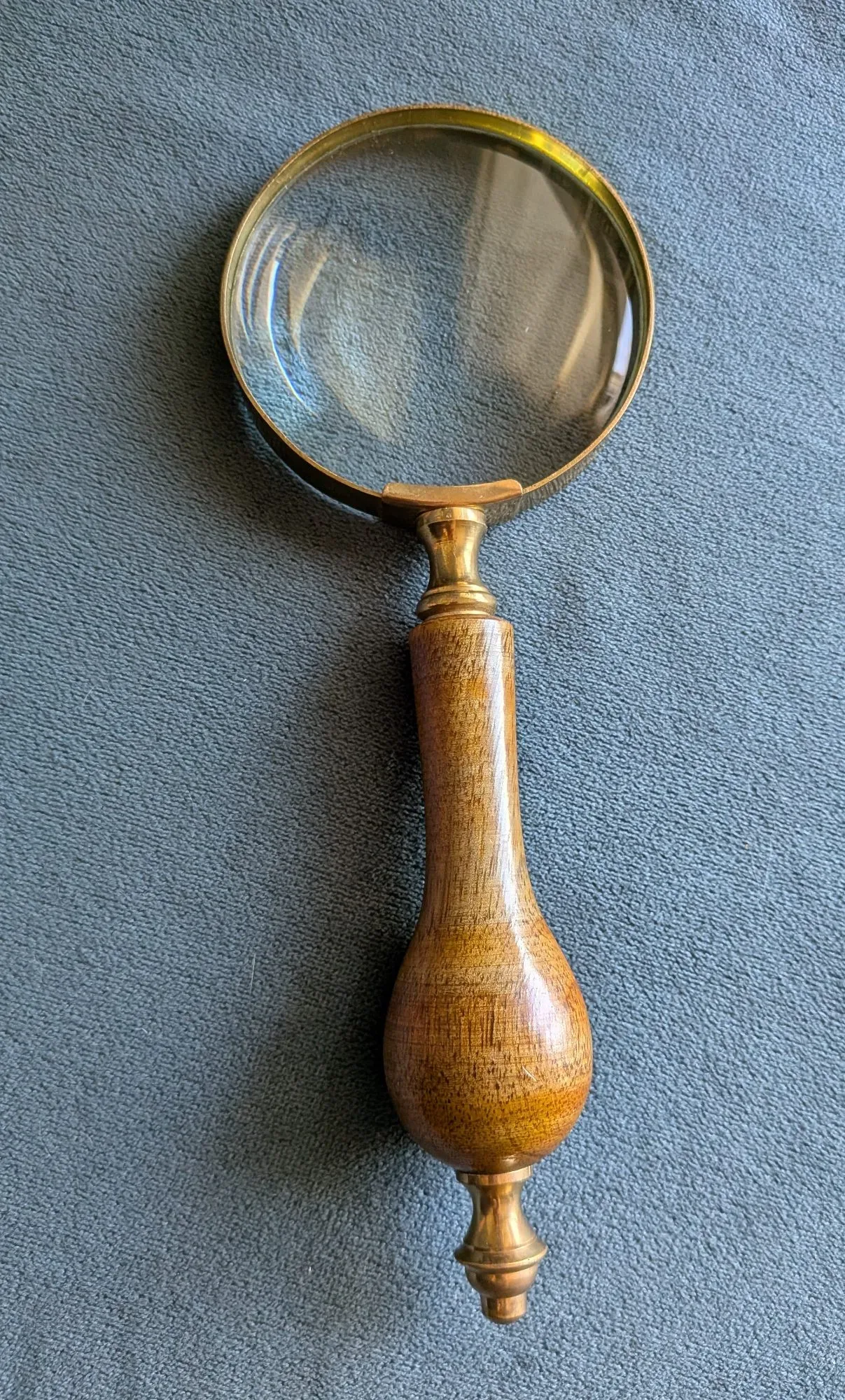

“A package price for both?” I asked. A few tens later, the day’s first finds were secured. No treasures, but pieces with the exact soul and quality we look for at Scandinavian Pickers.
But Enskede saved the real heart-pounding moment for last, just before the flea market closed for the day.
Further down the street, on a blanket rolled out directly in the blazing sunshine next to a blooming lilac bush, stood a stack of heavy, amber-colored and deep blue glass craftsmanship. In the sharp light at one o’clock in the afternoon, they sparkled like raw ice. The shape was completely unmistakable.
I turned over the largest dish and ran my finger over the raw, textured underside. The heavy, rough surface felt almost like frozen, flowing liquid.
Kosta Boda. Designed in the late 60s or early 70s by Göran Wärff. The glass had that unique, bubbly texture and a color that shifted from deep sea to warm resin depending on how the sun’s rays cut through the glass mass. It was not mass-produced, run-of-the-mill glass; it was a piece of heavy Swedish design history that had simply been gathering dust in a dark display cabinet for far too long.


As we packed the day’s harvest into the car and smelled the waxed wood, the brass, and the warm art glass, we knew immediately: these pieces didn’t just need a new home – they needed their stories told in our Journal.